Bullet vs Dome Cameras (and Turrets): Which Is Right for Your Property?
Bullet, dome or turret? The shape of a CCTV camera affects where it can go, how easy it is to aim, how it behaves at night, how often it needs cleaning and how hard it is to tamper with. This guide compares all three and recommends a mix for each type of property.
Why domes can suffer infrared glare at night and turrets do not
Which shape suits gates, ceilings, entrances and tills
What IP66, IP67 and IK10 mean for outdoor and reachable cameras
How to keep each shape clean, especially near the coast
Applies to
Bullet cameras
Dome and vandal dome cameras
Turret (eyeball) cameras
Junction boxes and brackets
Tools Required
No tools needed.
Before you start
A list of camera positions and what each must see
Important
Do not clean or adjust high cameras from a ladder alone. Work at height needs a second person.
Never place cameras where people expect privacy, such as toilets, changing rooms or guest rooms.
Step-by-Step Guide
Bullet, dome and turret, part by part
1 / 8 steps
Step 1
Bullet: long body and sunshade
The tube-shaped housing holds a larger lens and a sunshade that keeps rain and glare off the glass.
Expected result: You see why bullets suit long views at gates and driveways.
The infrared LEDs sit around the lens and shine straight out, so little light reflects back into the camera at night.
Expected result: Bullet night images rarely suffer from glare, though spider webs can blur them.
The lens and IR lights sit behind one clear or tinted cover. From a distance nobody can tell where it points.
Expected result: You see why domes are discreet and suit ceilings and tills.
To re-aim a dome, the installer loosens the cover screws, rotates the lens module and refits the cover.
Expected result: Domes take longer to adjust, which also makes them harder to knock out of position.
At night, IR light passes through the same cover as the lens. Dust, rain spots or scratches reflect it back and haze the picture.
Expected result: You know to clean dome covers with a microfibre cloth and check the lens seal.
The lens and IR lights face out directly, like a bullet, but the camera sits close to the surface like a dome.
Expected result: Turrets give clean night images and are easy to aim on walls and eaves.
Outdoors, the cable joint is the weak point whatever the shape. Use the waterproof kit and a junction box rated IP66 or better.
Expected result: Water and salt air stay out of the connector.
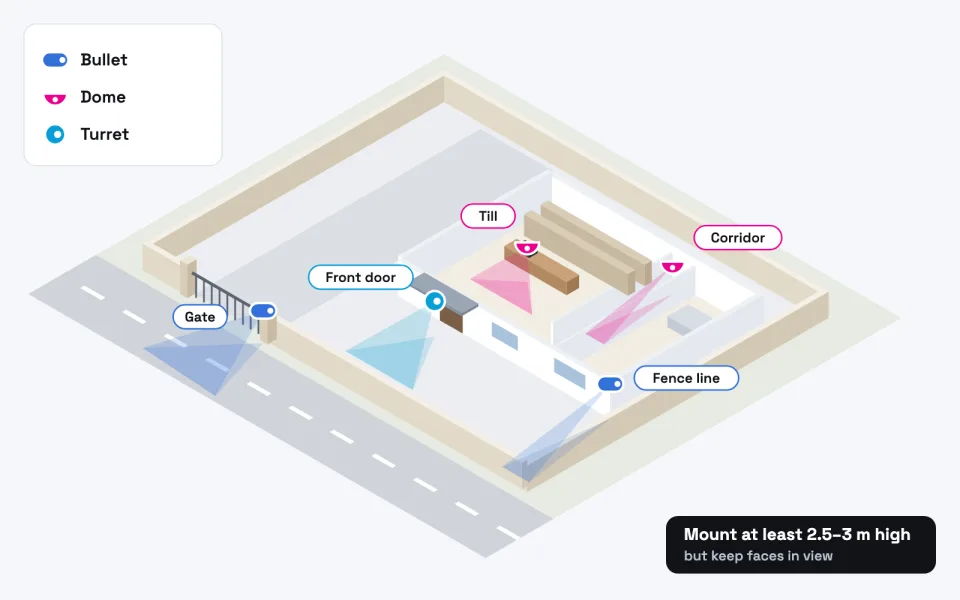
A typical layout: a bullet on the gate, a turret above the door, and domes over the till and in the corridor, all on one PoE switch and recorder.
Expected result: Each position gets the shape that suits it.
Troubleshooting
Common problems and how to fix them
1 Dome night picture is hazy or white
Likely cause IR reflecting off a dirty, wet or scratched cover, or a lens seal not seated.
Solution Clean the cover with a microfibre cloth, reseat the foam or rubber ring and replace a scratched cover.
2 Bullet camera triggers false motion alerts at night
Likely cause Spiders and insects drawn to the warm housing and IR light.
Solution Remove webs regularly, adjust detection areas and consider a turret in that position.
3 Glare from a nearby wall or gutter at night
Likely cause IR light reflecting off a surface close to the camera.
Solution Move or re-aim the camera so nothing sits close in front of it, then check a night recording.
4 Camera pushed out of position
Likely cause A bullet or turret mounted within reach.
Solution Mount it higher, or use an IK10 vandal dome where people can reach.
5 Outdoor camera fails after heavy rain
Likely cause Unsealed cable joint or a camera without an outdoor IP rating.
Solution Check the datasheet for IP66 or better, use the waterproof kit and a sealed junction box with a drip loop.
6 Brackets and screws rusting near the sea
Likely cause Salt air on plain steel fixings.
Solution Replace with stainless fixings and corrosion-resistant brackets, and inspect once or twice a year.
In Depth
In Depth
Bullet, dome or turret? The shape of a CCTV camera affects where it can go, how easy it is to aim, how it behaves at night, how often it needs cleaning and how hard it is to tamper with. This guide compares all three and recommends a mix for each type of property.
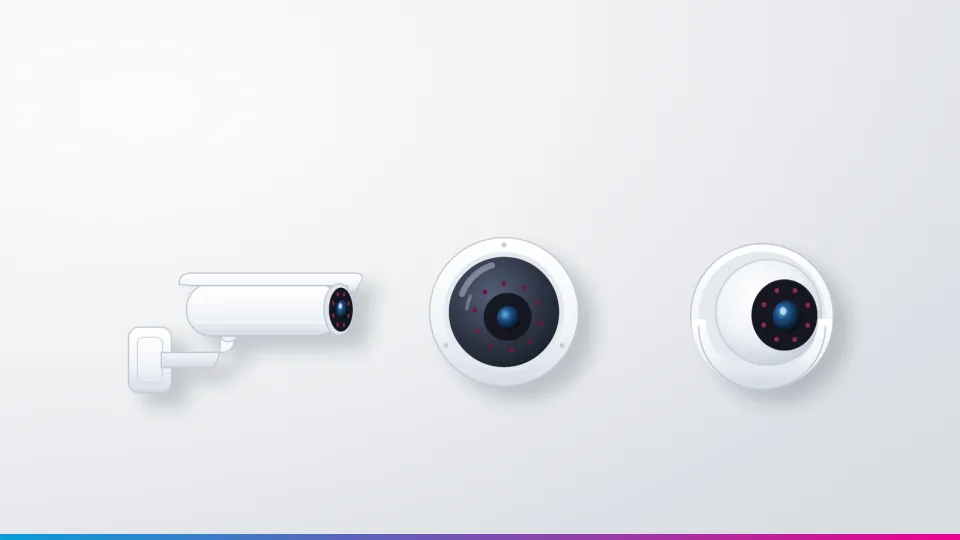
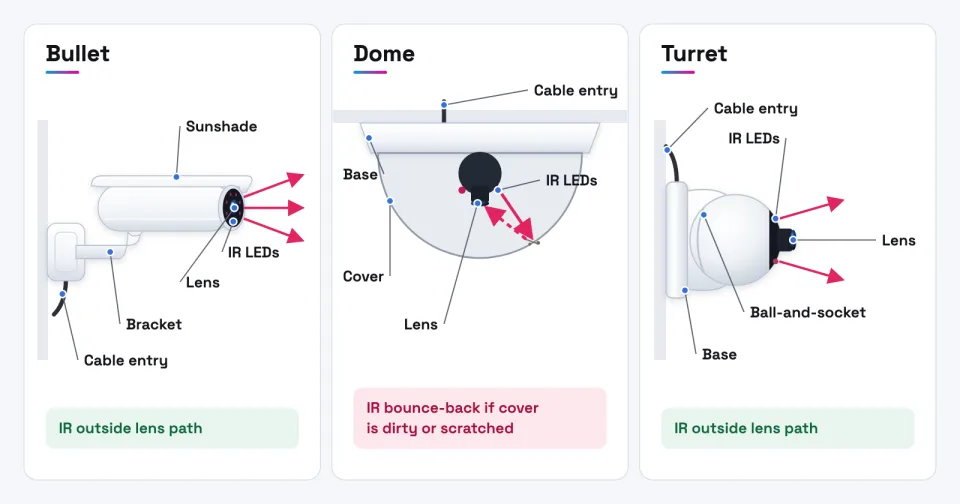
Bullet, dome and turret: three shapes, each with its own strengths.
What is a bullet camera?
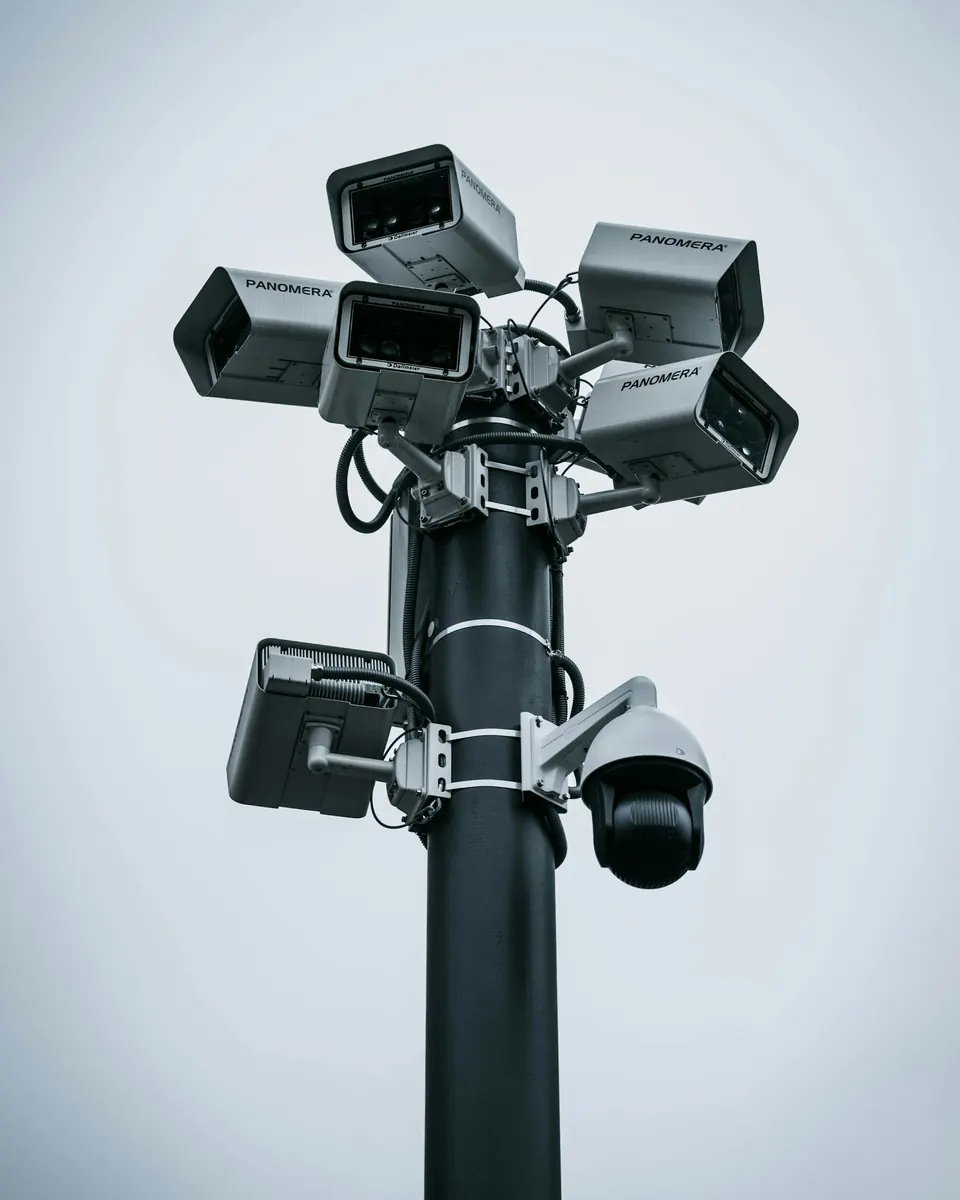
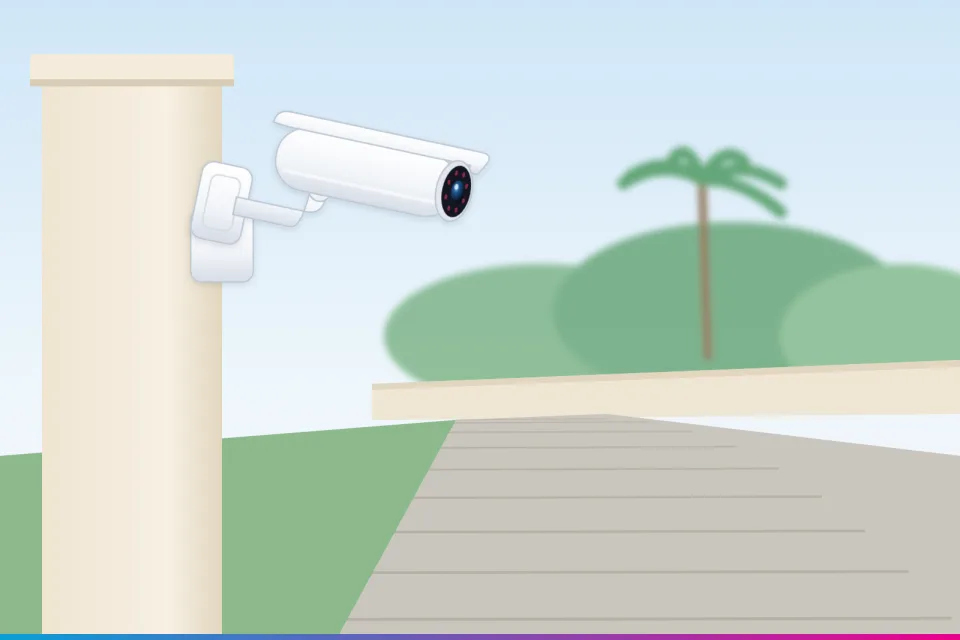
A bullet camera is a cylindrical camera on an arm-style bracket. The lens sits at the front of the tube, usually under a small built-in sunshade, and the bracket lets you point it in almost any direction. The long body has room for a larger lens, which is why many long-range and number-plate cameras are bullets. Everyone recognises the shape, which is part of the appeal.
Bullet cameras suit long views such as driveways and gates.
What is a dome camera?
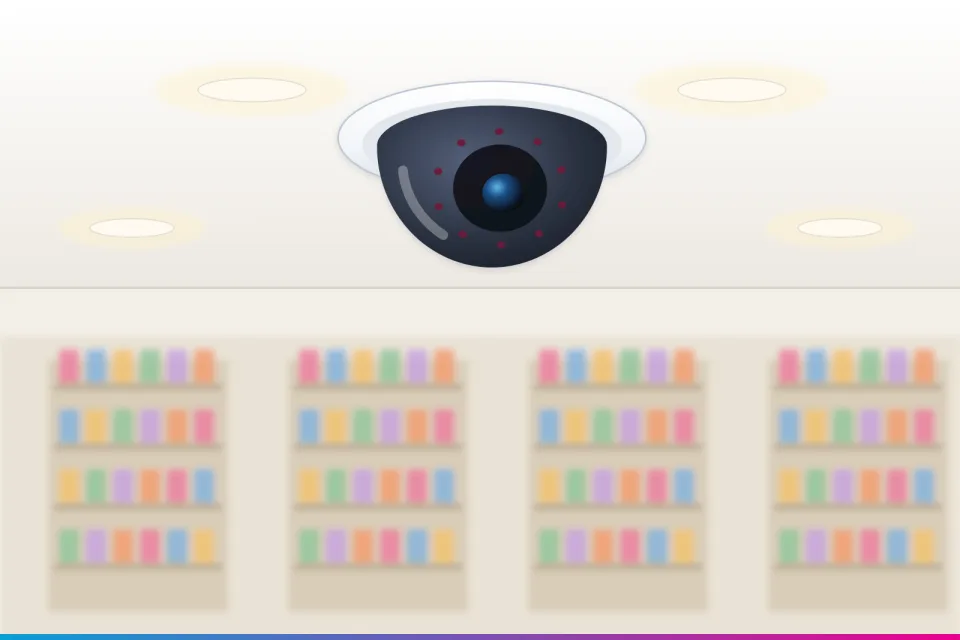
A dome camera has its lens and electronics inside a round housing with a clear or tinted cover (the "bubble"). It mounts flat against a ceiling or wall, and you usually remove the cover to adjust the angle. Domes are compact and discreet, and from a distance it is hard to tell which way the lens points. Vandal-resistant domes are built to survive blows and are hard to knock out of position.
Dome cameras are compact and discreet, ideal for ceilings.
The middle option: turret ("eyeball") cameras
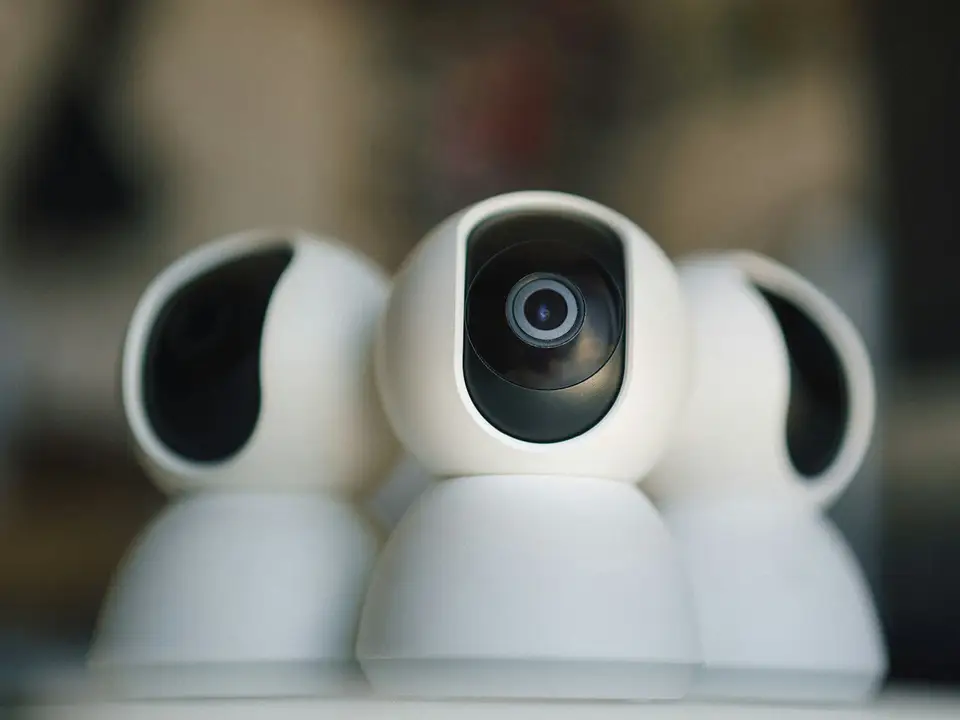
A turret camera looks like a dome without the bubble: a ball-shaped camera sitting in a round base. The lens and infrared (IR) lights are exposed at the front, as on a bullet, but the camera mounts close to the surface like a dome. Turrets avoid the night-time glare some domes suffer, and the ball-and-socket mount is easy to aim. In this guide, "dome" means the bubble type.
Design differences at a glance
The main difference at night: on a dome, IR light passes through the same cover as the lens.
Bullet
Dome
Turret
Shape
Tube on an arm bracket
Low profile under a cover
Ball in a round base, no cover
How obvious it is
Very visible
Discreet
Moderately visible
Aiming
Easy, adjust the bracket
Remove the cover, rotate the module
Easy, rotate the ball
Typical lens
Wide to long-range zoom
Wide to medium
Wide to medium
Night-time IR
Lights outside the lens path
Can reflect off a dirty or scratched cover
Lights outside the lens path
Cleaning
Lens glass and sunshade; spider webs
Whole cover; scratches easily
Small front glass
Tamper resistance
Easier to knock or redirect if in reach
Often best, if the model is IK rated
In between
Typical places
Gates, driveways, perimeters, car parks
Ceilings, reception, tills, corridors
Walls and eaves, entrances, indoors or out
These are typical traits, not rules. The specification of the actual model always decides.
Typical mounting positions
A typical mix: bullets on the perimeter, a turret at the door and domes inside.
Bullets are usually wall- or pole-mounted, high on an outside wall or gate pillar, pointing along a driveway, fence line or road.
Domes are usually ceiling-mounted indoors (reception, shop floor, corridors, lifts) or under an outdoor roof overhang. They look neatest on a flat ceiling.
Turrets suit walls and ceilings and are a common choice under eaves and above doorways.
Whatever the shape, mount the camera where it cannot easily be reached, ideally about 2.5 to 3 metres up, then check that the angle still shows faces, not just the tops of heads.
Visibility and deterrence
A visible camera tells people they are being recorded, and that alone deters some opportunistic theft. Bullets do this best because everyone recognises the shape. The cost of visibility is that a bullet within reach can be knocked, sprayed or turned away. A dome blends in and hides where it is looking, which suits hotel lobbies, offices and premium shops.
Tip You don't have to choose one. Many properties use a visible bullet or turret at the gate and discreet domes inside.
Field of view and lenses
How much a camera sees depends on its lens and sensor, not its shape:
Fixed lens: one viewing angle, chosen when you buy. Fine when you know exactly what you need to see.
Varifocal lens: the installer zooms in or out during set-up. Motorised varifocal models can be adjusted from the recorder or app, which saves a ladder trip.
Bullets suit long, narrow views, such as a face or number plate at a distant gate, because they can house bigger lenses. Domes and turrets usually cover wider, closer areas: a room, a till or a doorway.
Maintenance and cleaning
This is where the shapes really differ.
Domes: the cover sits in front of the lens and the IR lights. If it is dusty, wet, scratched or badly seated, IR light bounces back into the lens at night and washes the picture out ("IR bounce-back"). Clean the cover with a soft microfibre cloth, never a shirt or tissue, which leave fine scratches, and check the foam or rubber ring around the lens is seated.
Bullets: the IR lights shine past the lens, so bounce-back is rarely a problem. But the warm housing and the light attract insects, and spider webs across the lens trigger false motion alerts and blur the night picture.
Turrets: the IR lights are separated from the lens and there is less surface to collect dirt, which is why many installers like them outdoors.
Near the coast, salt spray dries into a film on any glass and corrodes cheap screws and brackets. Dusty roads and building sites coat lenses quickly. Plan a cleaning visit every few months and check the brackets at the same time.
Wipe lenses or dome covers with a microfibre cloth
Remove spider webs and insect nests
Check brackets, screws and cable glands for rust or looseness
Review a night-time recording for glare or haze
Weather and vandal resistance: IP and IK ratings
Shape tells you little about toughness. Two international ratings do, and they should be on the datasheet.
IP rating (ingress protection, IEC 60529). The first digit is protection against solids and dust, the second against water:
Rating
What it means
IP6x
Dust-tight
IPx5
Protected against water jets
IPx6
Protected against powerful water jets
IPx7
Protected against temporary immersion (tested at about 1 m for 30 minutes)
IP66 (dust-tight and protected against powerful water jets) is a common choice for an exposed outdoor camera. IP67 is not automatically "better" than IP66: jets and immersion are different tests, which is why many cameras state both, written "IP66/IP67".
IK rating (impact protection, IEC 62262). This measures how hard a blow the housing survives, from IK00 (no protection) up to IK10 (20 joules), with IK11 (50 joules) added by Amendment 1 in 2021. For cameras within reach of the public, look for IK10.
Warning Not every bullet is rated for outdoor use, and not every dome is vandal-resistant. Cheap indoor domes have thin covers that crack easily. Check the IP and IK figures for the exact model.
By day, image quality depends on the sensor, lens, resolution and settings, not the shape. At night the shape does matter:
IR range. Larger bullets often carry stronger IR lights for longer range. The stated distance is measured in ideal conditions.
Dome bounce-back. A dirty or scratched cover is the most common cause of hazy night footage on domes.
Nearby surfaces. Any camera close to a wall, gutter or roof edge can pick up IR reflected from that surface. Leave clearance and check a night recording before you finish.
Colour night vision. Some models use a white light or very sensitive sensors to show colour at night. That is a model feature, not a shape feature.
Cabling. Most professional IP cameras take data and power over one network cable (PoE). Every shape needs a weatherproof cable entry; bullets and turrets often use a matching junction box. The PoE budget calculator checks your switch can power them all.
Ceilings. Recessed (flush) dome installs look tidy but need a ceiling cut-out and more labour.
Power cuts. Put the recorder and PoE switch on a UPS so recording continues during outages.
Budget. Price depends more on resolution, lens, night vision, IP/IK ratings and brand than on shape. One varifocal bullet covering a long driveway may replace two fixed cameras. For figures for your site, request a quote.
When each is appropriate
Choose a bullet when you need distance (a long driveway, fence line, car park or number plates), you want an obvious deterrent, and the camera can be mounted out of reach.
Choose a dome when the camera is indoors on a ceiling, people can reach it or vandalism is a real risk (choose an IK10 model), or you want it discreet.
Choose a turret when you want clean night images without dome glare, the camera goes under eaves or above a door, or you want one camera type for most positions.
Choosing for your property
Property
Usual mix
Why
Home
Turrets or bullets outside; one or two small indoor domes if needed
Clear night images at gate and doors; easy to aim
Shop
Domes over tills and aisles; a turret or bullet at the entrance
Discreet inside, tamper-resistant within reach, faces at the door
Office
Domes in reception and corridors; turrets at entrances and car park
Professional look; covers who comes and goes
Hotel / guesthouse
Discreet domes in lobby and corridors; turrets or bullets at gate, car park and service areas
Guests stay comfortable; perimeter well covered. Never place cameras where guests expect privacy
Outdoor entrance or gate
Varifocal bullet or turret, IP66 or better; IK10 if reachable
Distance for faces and plates; weather and tamper protection
All three shapes can produce excellent footage; the right choice depends on where each camera goes, what it must see, who can reach it and how often it will be cleaned. If you would like a layout for your property, see our CCTV installation service, request a quote or contact us.
This guide is general information. Procedures, product features and firmware change, so check your own equipment's documentation before you start.
FAQs
Frequently asked questions
Is a dome camera better than a bullet camera?
Neither is better overall. Domes are discreet and often more tamper-resistant; bullets are easier to aim, more visible and better for long distances. Choose by location and the model's specification.
Can I use a dome camera outdoors?
Yes, if the datasheet shows an outdoor IP rating, usually IP66 or better. Mounting it under a roof overhang also keeps rain and sun off the cover, which reduces cleaning and glare.
Which shape gives the best night vision?
Bullets and turrets, because their IR lights sit outside the lens path. A clean, well-fitted dome can be just as good, but a dirty or scratched cover reflects IR back into the lens.
Why is my dome camera's night picture hazy?
Usually a dirty, wet or scratched cover reflecting the camera's own IR light. Clean it with a microfibre cloth, check that the foam or rubber ring around the lens sits properly, and look for nearby walls or eaves reflecting light.
Are turret cameras suitable outdoors?
Many are, but check the datasheet for IP66 or better. Because the lens is exposed, a turret within reach can be redirected more easily than a vandal dome.
What does IK10 mean?
It means the housing withstands a 20 joule impact under IEC 62262, the highest rating in common use on cameras. It is worth having for any camera within reach.
Which camera is best near the sea?
Shape matters less than build quality. Choose IP66 or better, check that brackets and screws resist corrosion, mount under shelter where possible and plan regular cleaning to remove salt film.
Need Professional CCTV Installation?
Our engineers survey the site, choose the right cameras and recorder, install them neatly and set up safe remote viewing.
Ask for clarification, tell us a problem this did not solve, or suggest a topic. An engineer reads every message, and we use them to improve the Knowledge Center.
BookBook a consultationPick a time to talk through your project.
Call us+255 674 020223
WhatsAppChat with our team.
Emailinfo@extrion.co.tz
PayPay withBank and mobile money detailsPBZ Bank 045 195 9000Mixx by Yas +255 674 020 223Lipa Namba 16172192
Find usKiembesamaki, Zanzibar
Ask Extrion
Engineers reply Mon – Fri, 08:00 – 17:00
End this chat?
We'll send a copy of the conversation to our team. Next time, the chat starts fresh.
online nowPeople browsing Extrion Tech right now
Privacy by design
A few cookies, only with your say-so
We use essential cookies to keep this website secure and working. With your permission we also remember your preferences and play embedded videos. No advertising trackers, ever. Read our cookie notice


 CCTV, Surveillance & Physical Security
8 min
Comparison